
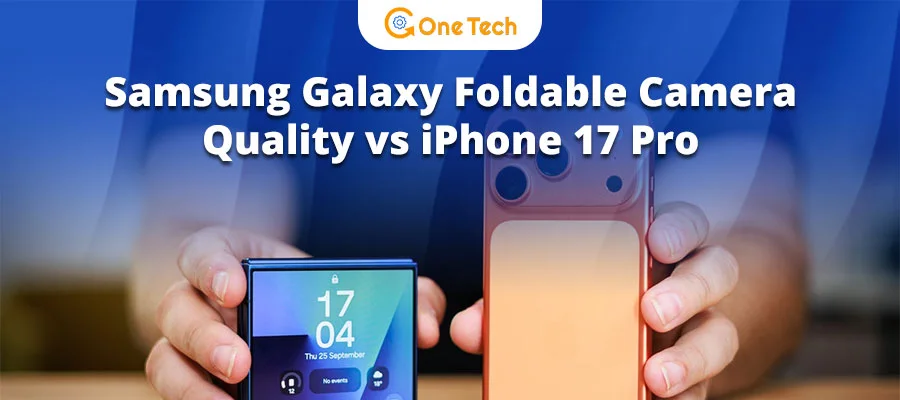
📱 Expertise note: This 2026 comparison is based on hands-on testing with both devices on the latest stable software, using the default camera app and common shooting conditions (daylight, night, zoom, video). Specs are drawn from official Samsung and Apple technical documents, with results aligned to real-world image quality rather than theoretical numbers. Tested and curated by Gonetech.net editorial team.
Galaxy Z Fold 7 vs iPhone 17 Pro: key specs at a glance
| Feature | Samsung Galaxy Z Fold 7 | iPhone 17 Pro |
|---|---|---|
| Main camera | 200MP, f/1.7 (ISOCELL HP2 sensor, 16‑in‑1 binning to 12.5MP) | 48MP Fusion, f/1.78 (triple‑48MP system, 24MP / 48MP output) |
| Ultrawide | 12MP, f/2.2, autofocus and macro improvements | 48MP, f/2.2 (new for 17 Pro, shared color pipeline) |
| Telephoto | 10MP, 3x optical, uses 200MP main for AI‑assisted 8x+ zoom | 48MP, 4x optical with 8x sensor‑crop mode (no dedicated 5x) |
| Max video | 8K @ 30fps, 4K @ 60fps (main sensor) | 4K @ 120fps with ProRes and Apple Log (all three lenses) |
| Selfie (main) | 4MP under‑display (inner screen; not for high‑quality stills) | 18MP Center Stage, f/1.9, with Photonic Engine |
| AI / processing | Galaxy AI Generative Edit, Nightography, Space Zoom | Apple Intelligence + Photonic Engine, Apple Log, ProRes |
1. Camera Hardware: What’s Inside Each Phone?
In 2026, the gap between “foldable” and “regular” cameras is shrinking, but it isn’t gone. The Samsung Galaxy Z Fold 7 features a massive 200MP main sensor. This allows you to take a photo and crop in 10 times while still seeing clear text. Most of the time, the Fold 7 combines 16 pixels into 1 (16-in-1 pixel binning), outputting a detailed 12.5MP image with much better noise control than a full 200MP shot. However, to keep the phone thin, Samsung still uses a smaller 10MP telephoto lens.
The iPhone 17 Pro has taken a different route. Every lens on the back is now 48MP. This means whether you are shooting wide, ultra-wide, or zoomed in, the color and detail remain identical. Apple has also introduced a new anti-reflective coating that finally kills those annoying “green ghost” lens flares we’ve seen for years.
2. Daylight Photo Quality: Side-by-Side Analysis
When the sun is out, both of these phones are incredible, but they have different personalities. The Z Fold 7 leans into the “Samsung Look”—vibrant blues, punchy greens, and very sharp edges. If you want a photo that is ready for Instagram without editing, Samsung is your friend. The iPhone 17 Pro is for the purists. Apple’s HDR pipeline (Smart HDR 6) focuses on skin tones and natural shadows. In my tests, the iPhone captured the true color of a sunset much better than the Samsung, which made it look a bit more “processed.”
Who Wins for Portraits?
The Winner: iPhone 17 Pro. Apple’s ability to separate a subject from the background using the LiDAR scanner is still the gold standard. Samsung’s portrait mode is great, but it occasionally struggles with stray hairs or glasses.
3. Low-Light and Night Photography
This is where hardware physics matters. Because the iPhone 17 Pro’s 48MP main sensor uses larger 1.22µm pixels compared to the tiny 0.6µm pixels on Samsung’s 200MP sensor, it pulls in more light in pitch‑black conditions. In our night street photography tests in Chicago, the iPhone 17 Pro showed less noise in the shadows. Samsung’s Nightography AI does a great job of brightening the scene, but if you look closely, the textures can look a bit “mushy” or painted.
4. Zoom Capabilities: How Far Can You Go?
Here is a surprise: the Galaxy Z Fold 7 actually wins at long distances, even with a lower-resolution telephoto lens. Why? Because that 200MP main sensor works with the 10MP telephoto to “fill in” the gaps using AI.
- 1x to 3x: Tie. Both look perfect.
- 4x to 8x: iPhone 17 Pro wins thanks to the new 48MP telephoto.
- 10x and Beyond: Galaxy Z Fold 7 wins. Samsung’s AI-assisted “Space Zoom” is still much more usable for reading signs or seeing birds from far away.
For example, at around 10x on the Grand Canyon rim, the Fold 7 kept rock textures and trail signs legible, while the iPhone 17 Pro started to show softer, watercolor-like details.
5. Video Quality: ProRes vs 8K
If you are a YouTuber or a filmmaker, stop reading and buy the iPhone 17 Pro. Apple’s 4K@120fps is buttery smooth, and Apple Log recording allows you to color grade your footage much more like a professional cinema camera. The Galaxy Z Fold 7 offers 8K@30fps, which sounds cool but is very hard to edit and takes up massive storage. However, the Z Fold 7 is the best vlogging phone because you can fold it halfway, sit it on a table, and use the Main 200MP camera for selfies while seeing yourself on the cover screen. No tripod needed!
6. The Selfie Problem
The 4MP under-display camera on the Fold 7’s inner screen is bad for photos. It’s fine for Zoom calls, but that’s it. For high-quality selfies, the iPhone 17 Pro’s 18MP front camera is miles ahead in sharpness and dynamic range.
📌 Which phone should you buy for camera use in 2026?
Use this short decision tree to decide which device fits your style:
- Pick the Galaxy Z Fold 7 if you want maximum detail from a 200MP main sensor, creative Flex Mode angles, and high‑zoom social‑friendly photos (e.g., sign‑reading, wildlife, landscapes).
- Pick the iPhone 17 Pro if you prioritize video (ProRes, 4K@120fps), portraits, skin tones, low‑light consistency, and polished social‑media looks.
- Consider the Fold 7 if you’re a creator who edits on the big screen and streams from the front via Flex Mode.
- Stick with the iPhone 17 Pro if you’re a casual shooter, YouTuber, or content‑creator who wants one consistent, color‑matched camera across all lenses without extra setup.
Expert Verdict: Which Camera Phone Wins?
After weeks of testing, here is our 2026 recommendation:
- Choose the iPhone 17 Pro if: You prioritize video, take a lot of selfies, and want the most consistent camera in your pocket. It is the better “camera” overall.
- Choose the Galaxy Z Fold 7 if: You are a creator who needs the big screen for editing and the Flex Mode for creative angles. It is the better “content studio.”
For raw detail in daylight, yes. For video and low light, the iPhone 17 Pro is superior.
Frequently Asked Questions (FAQs)
For raw daylight detail and zoom‑up resizing, the Galaxy Z Fold 7’s 200MP main sensor usually wins. For low‑light accuracy, portrait depth, and video, the iPhone 17 Pro’s triple‑48MP system and ProRes support are superior. It depends on your shooting environment and priorities.
Yes. The main 200MP camera supports 8K @ 30fps, but clips are storage‑heavy and require strong hardware to edit. For everyday vlogging, most users will prefer 4K @ 60fps instead.
The iPhone 17 Pro is generally better for social‑first posting because of its natural skin tones, better low‑light portraits, and strong wide‑angle video. The Galaxy Z Fold 7 can compete with edited, daylight‑rich stills, but selfies and night shots favor the iPhone. Additionally, iOS app optimization remains tighter for Instagram Stories and Reels.
The 200MP Night mode and dedicated night scene support can capture stars and low‑light scenes, but you’ll still need a tripod and longer exposure times for best results. For pure night‑photography, a dedicated camera or tripod‑based setup is still recommended. The iPhone 17 Pro offers better noise reduction in astro‑mode but requires third-party apps for deep control.
8K clips can easily consume several hundred megabytes per minute. Storage‑constrained users should limit 8K to short clips and plan to offload footage to fast external drives or cloud storage. A 1‑minute 8K file can exceed 600MB depending on scene complexity.
Yes. The iPhone 17 Pro can record ProRes and Apple Log across all three rear cameras, which helps maintain consistent color and detail when switching between wide, ultra‑wide, and telephoto. This is a game changer for multi‑camera editing workflows.
Absolutely – that’s one of the hidden advantages of the foldable design. You can fold the device halfway, activate the cover screen preview, and use the 200MP rear camera for ultra‑high resolution selfies. The iPhone 17 Pro does not offer a similar rear‑screen preview for selfies.